Skip to content
CH Centre Thrissur
All About Cancer

Cancer awareness and information

Skin Cancer

Protecting your skin and noticing changes can help reduce risk.

Skin cancer develops when abnormal cells grow in the skin. Major types include basal cell carcinoma, squamous cell carcinoma and melanoma. Some types can spread to other parts of the body if not treated.

Skin Cancer awareness

Understanding the disease

What is skin cancer?

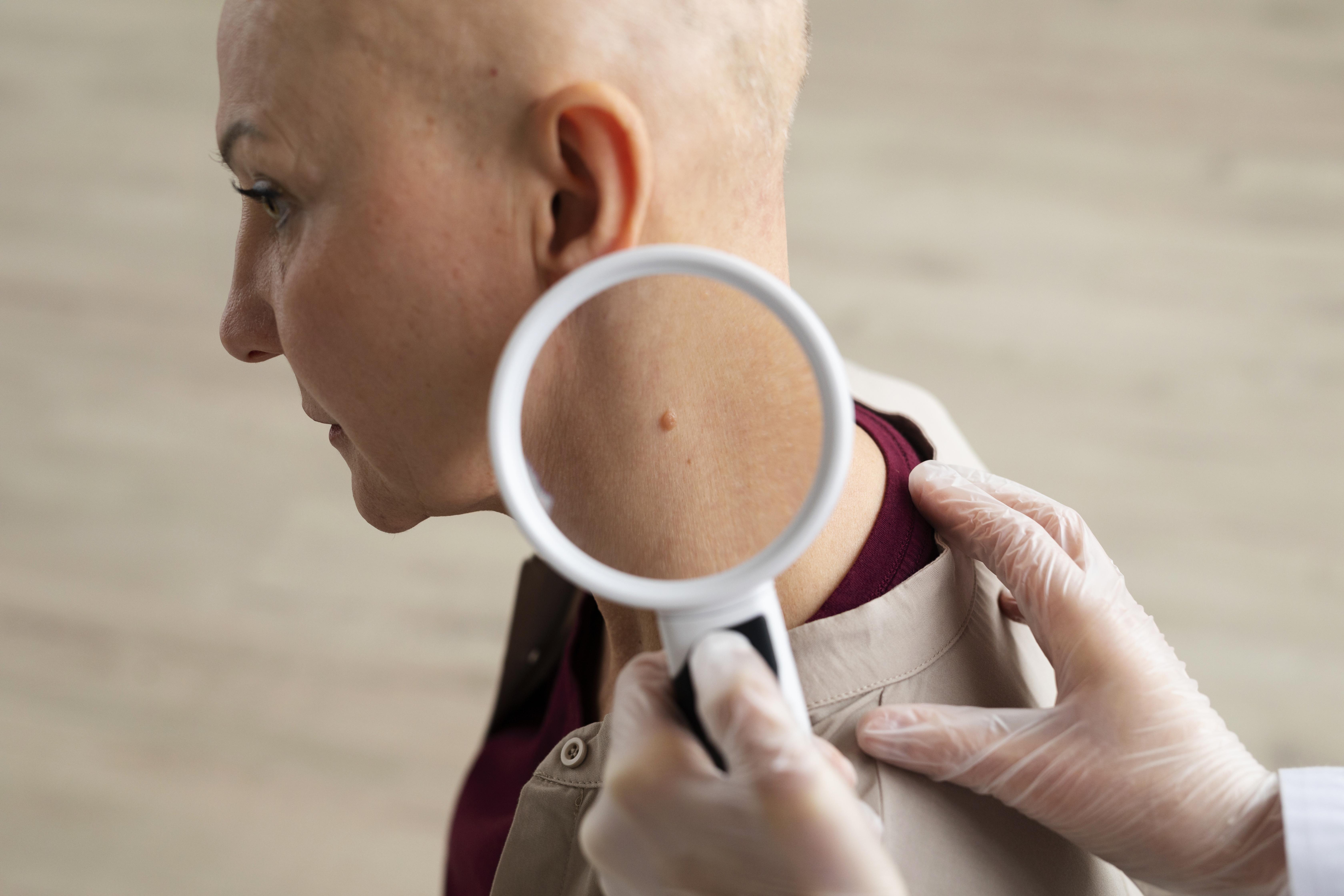
Many skin cancers are associated with ultraviolet (UV) radiation from sunlight or artificial sources. Knowing your skin and noticing new or changing marks can help identify concerns that need medical attention.

Important to know

A changing, bleeding or non-healing skin lesion should be assessed by a qualified healthcare professional.

Knowledge and awareness

What you should know

Understanding symptoms, risk factors and available care can help people make informed decisions with their healthcare team.

01

Symptoms & Warning Signs

Changes that may need medical attention. Symptoms can also be caused by conditions other than cancer.

  • A new growth, spot or sore that does not heal
  • A mole that changes in size, shape or colour
  • A spot that looks different from other marks on your skin
  • A lesion that itches, bleeds or becomes painful
  • A rough or scaly patch that persists
  • A wound that repeatedly heals and returns
02

Risk Factors

Factors that may increase the chance of developing this cancer. Having a risk factor does not mean someone will develop cancer.

  • Excessive exposure to ultraviolet radiation
  • Repeated sunburn, particularly during childhood
  • Use of tanning beds or sunlamps
  • A personal or family history of skin cancer
  • Having many moles or certain unusual moles
  • A weakened immune system
03

Prevention & Healthy Living

Practical steps that may help reduce risk and support overall health.

  • Seek shade, especially during the strongest sunlight hours
  • Wear protective clothing, a wide-brimmed hat and sunglasses
  • Use broad-spectrum sunscreen and reapply as directed
  • Avoid tanning beds and sunlamps
  • Check your skin for new or changing marks
  • Seek medical advice for suspicious or persistent skin changes
04

Screening & Early Detection

Tests and examinations that may help detect cancer or precancerous changes.

  • Be aware of changes in existing moles and the appearance of new spots.
  • A healthcare professional may examine a suspicious skin lesion.
  • A skin biopsy may be needed to confirm a diagnosis.
  • People at higher risk may benefit from an individual skin examination plan.
05

Treatment Options

Treatment depends on the cancer type, stage and the person's overall health.

  • Surgical removal
  • Mohs surgery for selected skin cancers
  • Radiation therapy
  • Topical medicines for certain superficial cancers
  • Immunotherapy for selected cases
  • Targeted therapy for certain advanced cancers

Compassionate support

No one should have to face cancer alone.

CH Centre Thrissur works to support people and families affected by cancer through care, accommodation and community support.

Medical information disclaimer

This page is intended for general awareness and educational purposes only. It is not a substitute for professional medical advice, diagnosis or treatment. Symptoms, screening recommendations and treatment options vary between individuals. Always consult a qualified healthcare professional for personal medical guidance.